Evidence before interpretation

Every symbol.
Every claim.
Traceable.

A free to use community workbench for inspecting MS 408, creating structured transcriptions, and testing research hypotheses.

Currently training on Isambard-AI, with the research workbench expected to open publicly in September 2026.

Human-in-the-loop·Source-linked·Reproducible·Rights-aware
How the evidence moves
01

Inspect

Examine the source in detail.

02

Transcribe

Create structured, source-linked transcriptions.

03

Compare

Compare patterns across the corpus.

04

Test

Test hypotheses with bounded claims.

05

Record

Record decisions for future researchers.
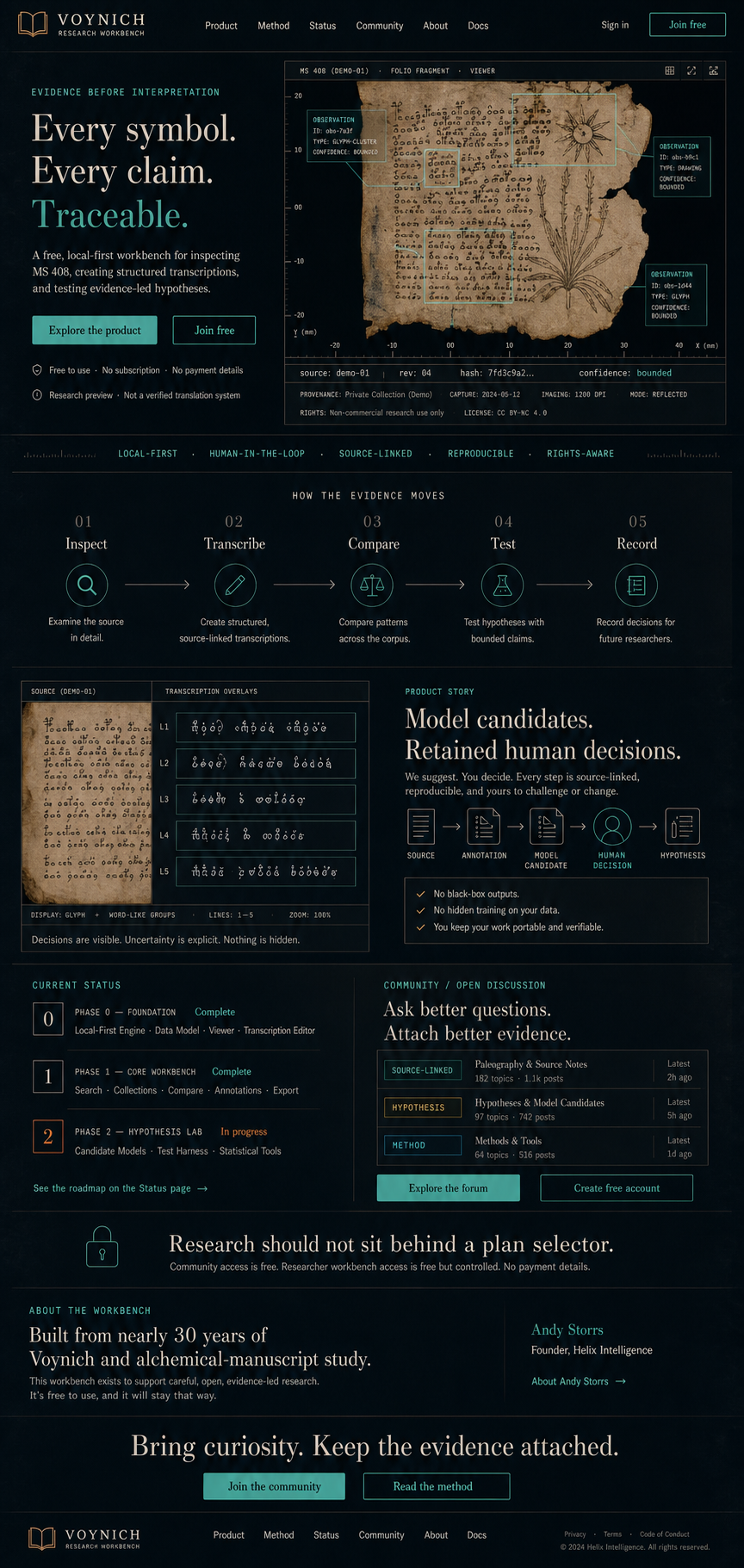
Transcription overlays
Detail from the approved fictional demonstration manuscript
L1ϟ ʘ ꝏ · ʒ ϙ ʘ ʘ ꝏ
L2ʒ ꝏ ϟ · ʘ ʘ ϙ ꝏ ʒ
L3ꝏ ʒ ʘ · ϟ ϙ ꝏ ʘ
L4ϙ ʘ ʒ · ꝏ ʘ ϟ ʒ
L5ϟ ꝏ ϙ · ʒ ʘ ϟ ꝏ ʘ
Display: glyph+word-like groups·lines: 1—5·zoom: 100%
System architecture

Several models, working on the same evidence.

The workbench is designed to combine multiple OCR systems with visual recognition, sequence models, statistical analysis and cross-script search. Each examines a different part of the manuscript. Their results are compared and returned as research candidates for human review.

System type
Human-guided multimodal research ensemble
Model families
Multiple OCR engines, visual recognition networks, character-sequence models, clustering and semantic retrieval
Comparative corpus
Over 70 languages and writing systems; over 40 grimoires, manuscripts and ancient texts
Historical range
Approximately 10,000 BCE through the early modern period
What it returns
Transcription candidates, confidence scores, similarities and testable hypotheses
Researcher role
Review, compare and decide what enters the research record