Beinecke MS 408
The manuscript no one has yet been able to crack.
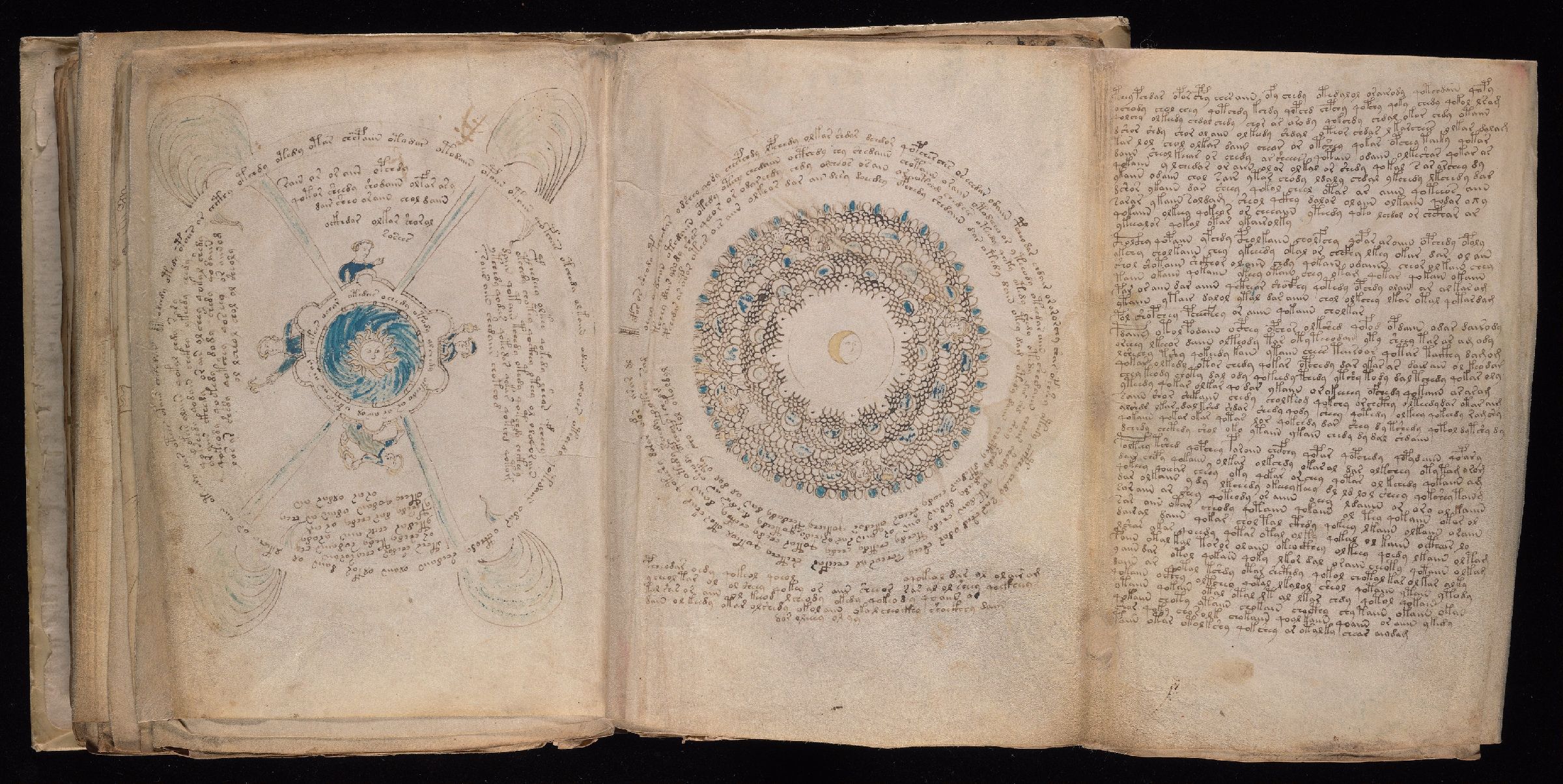
The Voynich manuscript is a richly illustrated medieval codex written in an unknown script by an unknown author. Its pages suggest plants, astronomy, cosmology, medicine and recipes, but six centuries after the parchment was made, there is still no accepted translation.
A history with gaps
What can be established.
The manuscript’s physical history is clearer than its meaning, although parts of its early ownership remain uncertain. The strongest account combines scientific analysis of the object with letters, signatures and sale records.
The parchment is made
Radiocarbon testing of four samples placed the calfskin parchment in this range with 95% probability. It dates the writing material, not necessarily the day the text was written.
Prague, Rome and a failed reading
The manuscript is associated with the court of Rudolf II, then with Jacobus de Tepenec, Georg Baresch and Johannes Marcus Marci. Baresch sent copied extracts to Athanasius Kircher, who could not read them.
Wilfrid Voynich brings it to public attention
The bookseller acquired it from a Jesuit collection near Rome. He promoted a connection with Roger Bacon, but the later radiocarbon date ruled out Bacon as its author.
From the book trade to Yale
Anne Nill sold it to dealer H. P. Kraus in 1961. After failing to find a buyer, Kraus donated it to Yale’s Beinecke Library in 1969, where it is catalogued as MS 408.
Centuries of attempts
Who has tried to break it?
The list reaches far beyond any one institution: early modern scholars, historians, linguists, palaeographers, professional cryptographers, wartime codebreakers, intelligence researchers, computer scientists and a very large independent research community have all taken a turn.
01
1630s Athanasius Kircher
One of Europe’s best-known scholars of scripts and languages received extracts but did not produce a translation.
02
1920s William Romaine Newbold
Newbold claimed to find microscopic shorthand revealing work by Roger Bacon. The method depended on ambiguous pen marks and did not survive scrutiny.
03
1940s–1960s Friedman, Tiltman and fellow codebreakers
William and Elizebeth Friedman, their study group, and British cryptanalyst John Tiltman brought formidable wartime experience to the problem. None found a reproducible key.
04
1970s Currier and D’Imperio
Prescott Currier identified statistically distinct varieties now called Currier A and B. NSA cryptologist Mary D’Imperio assembled the field’s most important early survey. These were advances in description, not decipherment.
05
1980s–today Statistics, linguistics and computing
Researchers have measured entropy, word structure, repetition, topics and scribal hands, and have tested ciphers and language models. The work has exposed real structure without yielding an accepted reading.
Where the research stands
Many claims. No accepted solution.
Announcements that the manuscript has been “cracked” appear regularly. Proposed readings have included Latin, proto-Romance, Hebrew, Turkic languages, Germanic languages, shorthand and invented language. The problem is not producing a plausible phrase from a chosen passage; it is producing a method that works consistently everywhere.
A natural or constructed language
Word frequencies and positional patterns look language-like. Researchers have proposed many language families, but no mapping yet produces a coherent manuscript-wide translation.
A cipher, code or abbreviation system
The text may hide a known language through substitution, shorthand, multiple values or several layers of transformation. No proposed key has generalised across the whole manuscript.
Generated or non-semantic text
A hoax or rule-based generator can reproduce some Voynich-like features. Recent work such as the Naibbe cipher shows what is mechanically possible, but does not decode the original.
What “cracked” should mean
A solution must be testable, not merely persuasive.
- State the rules clearly before applying them.
- Read unseen passages without changing the method.
- Produce coherent language across the manuscript, not isolated words.
- Account for spelling, grammar, structure and variation.
- Allow independent researchers to reproduce the result.
Structural discoveries are valuable, even when they are not translations. But as of today, no published proposal meets that full standard and commands broad scholarly acceptance. The Voynich manuscript remains unread.
References and further reading
Start with the manuscript itself.
These sources cover the object, its provenance, major cryptanalytic work, modern linguistic research and examples of how decipherment claims are assessed.
- Yale University Library — Beinecke MS 408 catalogue record and complete digital images
- Yale News — Mysterious Voynich manuscript reborn in facsimile edition (history and material analysis, 2016)
- Yale News — Deciphering a mysterious manuscript (current scholarly position, 2025)
- Mary E. D’Imperio — The Voynich Manuscript: An Elegant Enigma, NSA/CSS, 1978
- Claire Bowern and Luke Lindemann — The Linguistics of the Voynich Manuscript, Annual Review of Linguistics, 2021
- Lisa Fagin Davis — How Many Glyphs and How Many Scribes?, Manuscript Studies, 2020
- University of Bristol — statement on the disputed 2019 proto-Romance claim
- Michael A. Greshko — The Naibbe cipher, Cryptologia, published online 2025
About the researcher
Andy Storrs
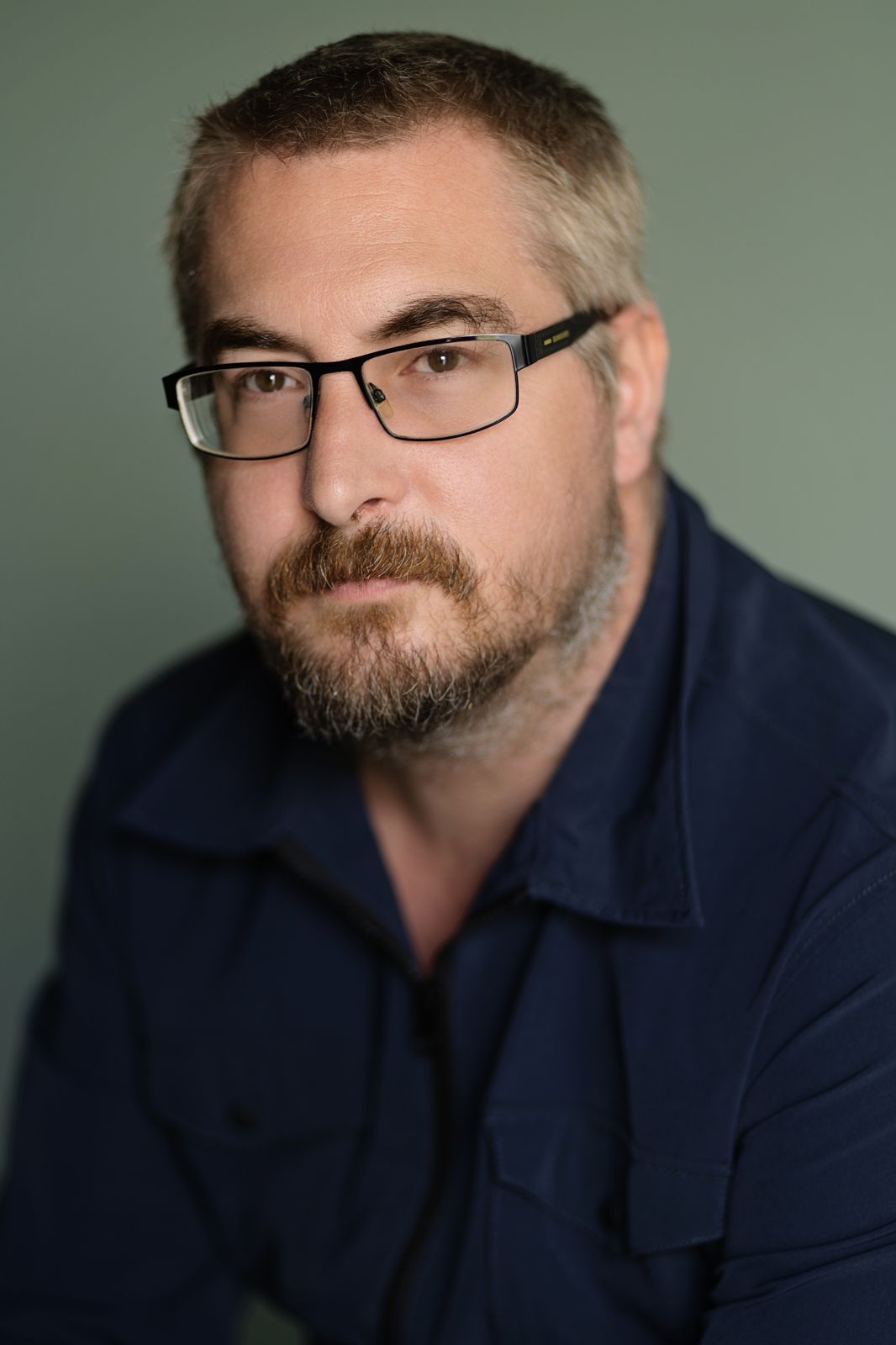
Andy has studied the Voynich manuscript, alchemical texts and related manuscript traditions for nearly 30 years. He created the Voynich Research Workbench to bring source images, transcription, comparative corpora and computational analysis into one place—and to test ideas against the evidence. Andy is the Founder of Helix Intelligence.
LinkedIn profile